79.8 F
Coral Gables
Saturday, April 4, 2026
April 4 , 2026
Home Blog Page 2

Put your tinfoil hat on: You shouldn’t dismiss conspiracy theories

0

When you think about conspiracy theories or theorists, you probably imagine a crazy person with a tin foil hat going on about how people in the government are lizards. You might also think about that meme from “It’s Always Sunny in Philadelphia” where Charlie Day’s character scribbles over the wall like a madman.

But, not everyone who’s a theorist wears their tin foil dunce hat. In fact, some conspiracy theories have solid evidence and end up turning out to be true. 

In a day and age where everything really isn’t as it seems, it’s important to not brush off some theorists, because many have actually turned out to be correct. 

Below are just a few examples of conspiracies that have been proven true. 

MK Ultra

Rumors that the U.S. government was making strides on mind control circulated during the 1960s. Those rumors sounded like something straight out of a science fiction novel. That was until government documents clarifying this dystopian idea were declassified in the 1970s.

From 1953 to 1973, the CIA conducted illegal and highly unethical experiments on unwitting U.S. citizens, according to a senate select committee. The agency administered LSD and other drugs to prisoners, psychiatric patients and even military personnel.

They utilized psychological torture and employed sensory deprivation in an attempt to develop mind control and interrogation techniques to use against the Soviet Union. 

With other controversies surrounding government trust at the time the files were declassified, it was safe to say that many people’s trust in the federal government had been punched in the gut. 

The ultimate false flag: Operation Northwoods

Believe it or not, U.S. military officials wanted to stage a terror attack on American soil targeting American civilians as an excuse to invade Cuba according to declassified files. The plan known as Operation Northwoods was a real drafted plan by U.S. military officials in 1962. It would’ve been an unthinkable notion that the military would create a plan that would kill American citizens, especially to justify a conflict with a man like Fidel Castro.

Castro had implied that he would be willing to destroy Cuba over surrendering to the U.S in a letter to Soviet Premier Nikita Khrushchev following the Bay of Pigs fiasco, which can be found on the JFK presidential library website.

Declassified documents revealed a proposed plan of committing acts of terrorism in major U.S. cities, including Miami, and blaming the attacks  on Cuba to manufacture public support for a war against Castro. Again, The Bay of Pigs invasion had failed in dramatic fashion. 

Thankfully, President John F. Kennedy rejected the plan, but the paperwork remains a chilling reminder of what military leaders were considering. 

The Watergate cover-up

The Watergate cover up is the gold standard of modern political conspiracies. When a group of men broke into the Democratic National Committee headquarters at the Watergate complex in D.C. in 1972, it was initially dismissed as a third-rate burglary. 

The idea that the president of the U.S. was intimately involved in a criminal espionage ring and a massive cover-up seemed far-fetched. To some, it may have even been seen as a poor attempt at pivoting by Democrats to blame the loss of 1968 and potential loss they would be facing in November on Republican sabotage.

It certainly wasn’t believable enough for most Americans in 1972, having virtually zero impact on President Richard Nixon’s historic landslide victory against George McGovern. 

But thanks to relentless investigative journalism and subsequent congressional hearings, the public learned the truth. The conspiracy went all the way to the Oval Office, ultimately forcing Nixon to resign in 1974. 

Unanswered questions

Other conspiracy theories that have yet to be proven true but have drawn massive speculation include Jeffrey Epstein’s suicide, the assassination of President Kennedy and the OJ Simpson murder case. Even with some of these cases being half a century old, they still raise questions about the trust people place in those in charge, and about cracks in the justice system. 

With the recent release of the Epstein Files, many secret dealings and emails have been revealed about who Epstein dealt with over the years — including with prominent politicians and celebrities. There is further scrutiny over the security footage and guard logs on the night Epstein committed suicide in a New York jail, showing a three minute jump in time with not much explanation, also fueled speculation about whether he did kill himself or not. 

In 1972,  the house select committee found that there was likely a conspiracy to kill President Kennedy. Whether President Johnson, the Soviets, or any of the other groups theorized had been involved in the killing has never truly been determined, or even outright dismissed. Even 60 years later when President Donald Trump released new files about the assassination, no new information was revealed.    

The entire world was glued to their TV sets in 1994, when former NFL Running back OJ Simpson was charged with the double murder of his ex-wife and her friend. Simpson was found not guilty in 1995, but the case officially remains unsolved. While several theories have been proposed, the main one still centers on Simpson. 

These claims have been backed, for a lack of a better term, by the evidence used in the trial of the century. These include Simpson’s blood at the scene and the blood of both victims being found in a sock at his house — all pointing the bloody glove at him.

But it was his daring hypothetical confession, “If I Did It” that was released in the early 00’s, which details how Simpson would’ve likely killed Brown and Goldman that further fueled speculation. An interview with his former agent Mike Gilbert in the ESPN special “OJ: Made in America,” supports the widely accepted theory that Simpson was guilty.

In the final episode of the limited docu-series, Gilbert details the final night he and Simpson spent at the Rockingham Estate, the home Simpson lived in during the years before and after the murders. 

Gilbert says he asked Simpson why he did it. Simpson calmly said, Gilbert claims, that had Brown not answered the door with a knife she would have lived. 

Simpson died in Apr 2024 still publicly maintaining his innocence. Leaving one of the most famous murder cases in American history to remain permanently unresolved.

While most conspiracy theories on the internet today are baseless, history shows us that we shouldn’t blindly trust official narratives without question. Healthy skepticism is a vital part of democracy. Especially when something goes “unsolved” on the books like the Simpson case.

The next time someone brings up a wild theory, just remember: Even a broken clock is right twice a day.

Media literacy matters now more than ever

News alerts appear on our phones, headlines fill our social media feeds and videos are circulated across platforms almost instantly after being posted. Information is constantly at our fingertips. But with that access comes a growing challenge: distinguishing what is true from false. 

Artificial intelligence, misinformation and hostile polarization toward the press make that distinction even more difficult. 

The spread of false information has created an urgent need for media literacy and responsible reporting.

Fake news, misinformation and disinformation

Fake news refers to false or misleading information presented as legitimate reporting. While some of this content is created as satire or for entertainment purposes, much of it is designed to mislead audiences and influence public opinion. 

Not all false information is spread with harmful intent. Misinformation occurs when inaccurate information is shared unknowingly, while disinformation is deliberately created to deceive. The intent of each is different, but both contributed to confusion and misunderstanding. 

As artificial intelligence continues to evolve, the line between real and fake is becoming increasingly difficult to identify. AI tools can generate realistic images, videos and text in seconds, allowing fabricated content to spread faster and appear more convincing than ever before. 

“If someone wants to find a seemingly realistic post that supports their stance, they easily can — even if the information shared is false,” said Yolanda Del Pino, a member of UM’s Debate Team. “This leads to many sharing misinformation, since the audience themselves don’t know it’s false.”

OpenAI’s recent decision to shut down Sora — a generative AI video model — is a big win in the fight against fake news, but AI generated videos were and still are rampant across social media. This week, it’s the controversial Love Island fruit, but what will it be next? 

Even harmless content — like viral videos of animals doing unrealistic tricks like jumping on a trampoline — demonstrates how believable AI-generated media has become. But when applied to political or social issues, that same realism can have far more serious consequences. 

Unlike in traditional newsrooms — where stories are reviewed, fact-checked and edited by multiple people — many social media influencers post without a second set of eyes looking over their content. Our attention spans are too short to fact check everything and we scroll to the next video, often without a second thought. 

“In a media environment shaped by algorithms and emotion-driven content, media literacy isn’t optional — it’s a civic skill,” said UM Communications Professor Ana Francois. “Understanding how information is produced and circulated is essential to making informed decisions.” 

Bias in media 

Bias within media organizations just further complicates how audiences are interpreting information. 

It is well known that many media organizations are biased. According to AllSides, outlets like The Atlantic, The Guardian and The New York Times are left leaning, while Fox News, The Federalist and the New York Post lean right.

Del Pino participated in a campus-wide St. Patrick’s day debate on March 17 about whether social media companies should be held liable for misinformation. 

“The debate definitely strengthened how distinguishing between misinformation and fact has become a problem in social media,” said Del Pino. “Though it is information unintentionally shared, it still worsens the political polarization.” 

Although bias does not automatically mean falsehood, it does create blind spots for readers. While two outlets on the opposite end of the political spectrum may produce the same content, the framing could cause audiences to accept misinformation that aligns more with their views.

Media biases also come with disinformation campaigns. They capitalize on the reader’s existing views, sharing a false headline confirming what they already believe about the “other side.” This contributes to the already polarizing climate in America, affecting the trust in and the freedom of the press.

People are becoming increasingly distrustful of journalists, according to Pew Research. 

The term “fake news” has been used by politicians to describe pretty much anything they do not agree with. 

Newsrooms have become battlegrounds for polarization — instead of seeking for the most accurate source, readers are looking for the source that best sides with their views. This is known as confirmation bias, which can lead a person to have overconfidence in their personal opinions. 

It is important to consume media from different sources to get the most accurate information possible

What needs to change and The Hurricane’s role

As media landscapes continue to evolve, both journalists and consumers must adapt. 

Headlines carry more responsibility than ever in this age dominated by short-form news and rapid media consumption. Responsible reporting starts with accurate, thoughtful headlines that inform rather than mislead. 

Speed should not come at the cost of accuracy. Rushing to be the first to post about a breaking issue can be extremely risky. If something is posted without being fact checked, it is easy to make mistakes. These mistakes contribute to the spread of misinformation. 

At the same time, audiences should be more conscious of how they consume this type of content. Rather than immediately resharing or reposting, taking the time to actually read the full article can help mitigate misinformation. Slowing down, questioning sources and seeking multiple perspectives are essential steps in becoming more media literate. 

“Fake news thrives when audiences stop asking basic questions — who created this, why it exists, and what evidence supports it,” Francois said. “Media literacy helps audiences slow down and think critically, especially when misleading content can look convincingly real.”

As a trusted source of information for students and faculty, it is our responsibility to uphold journalistic standards while distributing accurate, verified news to a growing campus community.

If you have information to share with TMH, submit a tip through the link on our website or in our bio on Instagram @themiamihurricane.

Fake News 101: How to spot it, stop it and maybe even laugh at it

0

Fake news has become an undeniable shadow in modern life — one that follows every scroll, every headline and every breaking news alert that flashes across our screens. As misinformation spreads rapidly, media literacy has never been more critical than it is today. 

It doesn’t always look dangerous. Sometimes it’s dressed up as a shocking statistic. Sometimes it’s a blurry screenshot. And sometimes, it’s so ridiculous it almost feels like satire — except when it isn’t.

In an age where information moves faster than verification, the line between truth and fiction has never been easier to blur. And while misinformation has always existed, its reach and its impact on people has grown exponentially.

So how can  you tell what’s real?

Spotting fake news isn’t about being cynical — it’s about being curious. The best readers don’t blindly consume information, they question it. 

As artificial intelligence adds new challenges to verifying what we see online, it’s important to remember what news is supposed to be: truthful, reported stories about real people and the real world. If people want to share facts instead of fueling falsehoods, a few simple habits can help.

Check the source, not the headline

If a headline feels designed to evoke an immediate reaction — anger, shock, outrage — that’s your first clue to pause. Look at where it’s coming from. Is it a reputable outlet, or a site you’ve never heard of? Read the publication’s “about” page. Look at other stories it has published. A credible source will usually be transparent about who runs it, who writes for it and what its editorial standards are. 

If the site is filled with sensational headlines, little sourcing and lacks clear authorship, that should raise concerns. 

If it sounds unbelievable … it probably is

Fake news thrives on extremes that are designed to hook you, not inform you. Some of these fake stories are so over-the-top and ridiculous that they collapse under their own absurdity. Recognizing that is part of media literacy too. 

Misinformation often relies on people reacting before they think, especially when the claim is dramatic enough to feel urgent. That is what makes it effective — it pushes people to repost first and verify later.

“I repost a lot of news on Instagram especially, but I want to make sure it’s true before I do that,” a UM student who wished to remain unnamed said when asked about the rate at which misinformation spreads. “I don’t want to repost clickbait.” 

If something doesn’t sound plausible, that does not automatically make it false — but it should make you slow down. Extraordinary claims need extraordinary proof. If a story is trying harder to shock you than inform you, that is a sign to be cautious.

Look for evidence

Real journalism always shows its work. Reliable reporting tells readers where information comes from, whether through named sources, public records, interviews, documents or verified data. 

If an article makes a major claim without showing where it came from, that should set off alarm bells.

Readers should also pay attention to whether quotes seem complete and completely in context. A screenshot of a quote or a single sentence pulled from a longer interview can often be misleading if the surrounding context is missing. 

A good rule of thumb is that the more serious the claim, the more important it is that there is clear evidence supporting it.

Cross-check the story

One of the easiest ways to test a story is to see whether other reliable organizations have confirmed it. Search key details — not just the exact headline — and compare how different outlets are covering the same claim. If only one obscure account, blog or page is talking about it, always verify the story with another source.

Cross-checking also helps readers see whether facts are consistent across reports or whether details begin to fall apart under scrutiny. In a digital environment where anyone can post anything, verification often comes from comparison.

“If it seems insane, I usually believe that it is, unless I see multiple [outlets] reporting on it,” said another UM student who requested to remain unnamed. 

If it’s real news, multiple credible outlets will likely be reporting it. If it exists only in one corner of the internet, that might be worth pausing over.

At the end of the day, fake news doesn’t spread on its own. It spreads when people trust too quickly, share too fast and question too little. 

Thankfully, that can be fixed. 

But it starts with you. 

Starbucks on campus sees rise in theft reports and drink mix-ups

Starbucks mobile orders are going missing, and students believe that they are being stolen. 

According to a non-scientific survey posted on The Miami Hurricane’s Instagram story for 24 hours, more than one third of 35 respondents reported their drinks missing upon arrival. Of that figure group who marked that their drinks had been missing, nearly one third said it happened multiple times. 

A student and former Starbucks employee who wishes to remain unnamed, has dealt with multiple instances of drink-theft, both while working behind the counter and as a customer. 

“I watched a girl steal my drink yesterday when the cafe was pretty empty,” she said. “I know several people who have had their drinks stolen at this location, including friends and customers reporting it to us during the time I worked at this Starbucks store in Shalala.”

While reporting her stolen drink to a UMPD deputy, the student said that another student also approached the deputy and said that her drinks had also been stolen multiple times. 

According to the police report, an unknown white female in a gray sweat suit and gold headphones took the unnamed student’s beverage and exited the Starbucks. UMPD CCTV footage confirmed that the suspect left campus with the beverage, and headed towards the Metro Rail. 

Jessi Kaplan, a junior at UM, also experienced a missing mobile order. 

“I was so upset. I have a very busy schedule. I just needed a little pick-me-up,” she said. “I had been waiting for so long. I asked them if my order was ready, and showed them my confirmation, and they said they couldn’t find my order. So, it was definitely stolen.”

More than 80% of survey respondents said they would report their stolen drink to a staff member to remake the order. However, the unnamed student and former employee said that approach may not benefit the customer nor the employees. 

“It’s not fair for the customer to have to ask the barista about their drink after waiting pointlessly for 15 or more minutes in a busy crowded cafe,” she said. “Or [for] the barista who is often overwhelmed by the large number of orders already and now has to stop everything to remake a drink that was taken.”

Currently, no proof of order is required to pick up a mobile order. Mobile orders are placed on the counter with the customer’s name on it.

About 55% of respondents from the original survey say that closer monitoring by Starbucks employees would likely reduce drink-theft.

Mobile orders can be placed by either using the Starbucks app or Grubhub, where students can pay by card or Dining Dollars.

Miami Dolphins player shares his recovery journey with Substance Awareness Club

Miami Dolphins tight end Darren Waller collaborated with UM’s Substance Awareness Club to share his experience with substance abuse and his recovery journey on Tuesday, March 24.

Waller said that his first experience with drug use was at a friend’s house when he took hydrocodone in his sophomore year of high school.

“I was kind of depressed at the time, really anxious, really wanting to fit in and looking for something that would quiet all of the noise going on inside my mind,” Waller said

His substance use escalated by junior year of high school, drinking beer, liquor and smoking cannabis. Waller then went on to play football at Georgia Tech from 2012 to 2014, where his drug use became even more frequent.

“How much I could drink, how much I could smoke, that became my identity. It was around that time that I started to see like, ‘Oh, this is kind of different from everybody else,’” Waller said.

Despite Waller’s substance use, those around him did not initially notice any warning signs.

“It wasn’t really anything that anyone could pick up on. I could always give you a smile, make you laugh, I was getting good grades,” Waller said.

Waller’s experience is more common than some people may realize. According to the 2023 National Survey on Drug Use and Health, 22% of college students had taken an illegal substance within 30 days of taking the survey and that over a quarter of college students had a substance use disorder (SUD).

During the 2015 NFL draft, Waller was drafted by the Baltimore Ravens. He played for three years before he received a year-long suspension from the NFL for repeatedly failing drug tests.

A few months after receiving his suspension, Waller overdosed in August 2017 when he unknowingly took fentanyl.

“That was a moment that definitely opened the door for my life to change,” Waller said.

Waller spoke about the time he spent in a rehabilitation program following his overdose and emphasized how being honest with himself and others helped him in making a meaningful recovery.

“When you can get these things out and share them, you almost feel lighter emotionally, mentally, spiritually,” Waller said.

He also talked about other coping strategies he learned in the program that he used once he returned home, including journaling, meditating and taking walks.

“I may not be back in the league, I may not be making as much money as I was before, but I’ll at least feel good about the life I’m starting to make,” Waller said.

Before going back to the Ravens post-suspension, this time as a practice squad member, Waller worked at Sprout’s Farmers Market. He was later signed by the Oakland (now Las Vegas) Raiders ahead of the 2018 season, where he played in the last several games in 2018 and was given the opportunity to start in 2019.

“The work that I was doing in recovery was, I think, what allowed me to have the foundation to take that opportunity and capitalize on it,” Waller said.

Waller emphasized that isolation can be a major warning sign of substance abuse and gave the audience questions to ask themselves about people in their life that they are worried about.

“Are they around people on a regular basis? Do they say they’re gonna show up to certain places and they don’t?” Waller said.

According to the Mayo Clinic, financial and physical health issues as well as changes in behavior are additional signs of SUD.

For those seeking help for their substance abuse, Waller believes that people need to be motivated from within in order to truly make a recovery.

“People need to get tired of their own situation,” Waller said. “Even if they go down the path of recovery, but they’re doing it for a sport, another person, it will always fall on its face because it’s never about them.” 

To close out, Waller reminded people that their mistakes do not define them and that they can live a fulfilling life despite setbacks. 

“Even though we’re trying to walk a certain path, you don’t have to be perfect to have a successful life,” Waller said.

Substance Awareness Club president and founder Luke Bell was very appreciative of turnout for the event.

“This [support from students] is a full circle moment for me. This is a huge part of the reason why I’m sober,” Bell said.

The Darren Waller Foundation, a non-profit foundation started by Waller to help young people receive treatment for substance abuse, has more information about Waller’s story on their website.

Visit @umsubstanceawareness on Instagram to learn more about how to get involved in substance awareness-related events on campus.

Rafael Gonzalez-Acosta named incoming Senate Speaker Pro Tempore

The University of Miami Senate voted for their Speaker Pro Tempore for the 2026-2027 school year, with Rafael Gonzalez-Acosta winning the election held on Wednesday, March 25.

The Speaker Pro Tempore is the second-in-command of the Senate, and works closely with the Speaker. Trinity Vodovoz was recently elected to be the next Senate Speaker.

As Gonzalez-Acosta prepares to step into his new role, he is reflecting on the goals he hopes to achieve.

“My biggest goal for Senate is to create better connections with constituencies and administration,” said Gonzalez-Acosta. “The First Year Senators can have forums with freshmen for example, and have space to actually talk with their constituents.”

Gonzalez-Acosta joined the Senate during the first semester of his freshman year. He is a current junior and has served as a College of Engineering Senator for the past three years. 

In this role, Gonzalez-Acosta worked to widen engineering software access beyond UM Wi-Fi.

“I worked with IT to make a virtual machine where you can access the software off campus so commuter students don’t have to stay here until midnight finishing assignments,” Gonzalez-Acosta said.

He also served as the Faculty Senate Liaison where he worked with administration members and relayed information back to Student Senate.

During his time on Senate, Gonzalez-Acosta has pushed to improve grade transparency for students alongside fellow Senators.

“We want professors to be posting grades on time and for students to have access to the grading scale on the syllabus before registering for classes,” Gonzalez-Acosta said.

His years of experience and collaboration with fellow Senators prepared Gonzalez-Acosta to run for Speaker Pro Tempore.

“I was inspired by the Senators that came before me,” Gonzalez-Acosta said. “My big in Senate was the Speaker Pro Tempore during my freshman year, so it’s like I am standing on the shoulders of giants.”

Gonzalez-Acosta was one of four candidates in the Speaker Pro Tempore election. He ran against his fellow Co-Chair of Academic Affairs, as well as the two Chairs of University Affairs, making for a competitive race. They each gave a three minute speech, with an additional 90 seconds for questions.

A specific issue that Gonzalez-Acosta would like to further address in Senate is the career services department at UM. He wants to improve resume reviews and career fairs for all students.

“Miami is an industry hub. The industries should be coming to campus,” said Gonzalez-Acosta.

As a student leader, Gonzalez-Acosta hopes to leave a legacy in Senate by setting an example for future Senators and creating a tight-knit community.

“The Speaker and I want to leave Senate better than we found it, and build a long-lasting relationship between students and administration,” said Gonzalez-Acosta.

Student entrepreneurs compete for $67,500 at annual Business Plan Competition

$67,500 is at stake in the The University of Miami Herbert Business Schools’ annual Business Plan Competition. For 24 years, this experience has been a chance for students to gain real advice and mentorship, and pitch their business idea to a panel of experienced judges.   

Dr. Susan Amat, an associate professor of professional practice in the Department of Management at the Herbert Business School, has been running the business plan competition with two of her colleagues for the past five years. She also participated in the competition while she was at UM completing her MBA. They host two competitions a year, beginning in the fall  with the elevator pitch competition and then the business plan competition in the spring.

“Every Wednesday, we have a workshop for the next six weeks, starting on Wednesday [March 18], where we help entrepreneurs, especially those who aren’t in the business school, understand different parts of the business plan,” Amat said. 

Any student can participate in the competition, whether they are a business student or not. Some students have already developed a company and others have just started their business. 

Students have access to mentors, pitchlabs and workshops. Applications are due on April 3 and are evaluated, then about 20 to 30 students will progress to the semi-finals.

In the semi-finals, entrepreneurs will present and answer questions to a panel of judges, with six  to eight groups progressing to the final round. The final round is scheduled to be held in the Storer auditorium where family, friends, faculty and students can come to cheer.

Amat highlights the importance of the competition as a great opportunity, even if you don’t win prize money. Overall, it is a great experience that builds your company and skills.  

“We’ve had so many companies not win the top prize, but get 100 downloads during the competition, find investors, and find customers,” Dr. Amat said. “Because you put yourself out there and you’re making a sales pitch for finding great people to get involved, invest in you, buy your product, etc.”

Kyle Levy was one of these students who participated in the business competition. In his first  year at UM, he first came up with his business idea, Unihop. Levy was first inspired when he noticed how uncoordinated the UPS store was on campus. 

“We offered an alternative solution, where people could send packages to us, and then they could schedule a time, and we would hand deliver it to them at any of the buildings. And people loved it, especially at the start of each semester,” Levy said.

Unihop has since evolved to be a successful company that provides faster and more efficient deliveries, and works with many businesses that rely on local deliveries. 

In terms of being successful in the competition, Dr. Amat said that the most important step to developing your company is to really hone in on what the consumer problem is, and then work from there.

“The reality is entrepreneurship is about solving a customer problem for profit. And so I would say that the key to doing well in life, in entrepreneurship, but definitely for our competition, is focusing on who’s your customer and what problem are you solving from them,” Dr. Amat said.   

While starting up his business, Levy said that he participated in the competition partially because he had a good relationship with Dr. Amat who encouraged him to take part, but also because he wanted to take advantage of the great resources that the business school provides. 

“I had known about the competition before coming to UM, and I knew that was the big thing to do in the business school,” Levy said.  

Dr. Amat emphasized the importance of utilizing all the resources available while you are still in college. The Miami Herbert business schools ranking has gone up throughout the years with the entrepreneurship program ranked No.16 nationally. 

“There are many, many tools and competitions like this that are merit-based that if you’re putting the time in and you can show that you are ready to lead something to the next level, there’s support there for you,” Dr. Amat said.“So I think that that’s a really incredibly lucky evolution of the school.” 

Throughout the process, Levy said that he developed many crucial skills for developing his now successful company. He says that personal resiliency was one of the main skills that he got out of the experience. Levy says that when managing a business there are never any easy days, and being in the competition taught him to be resilient and put in the most effort he can.

Dr. Amat said that, throughout the years she has been a part of the competition, it has evolved and improved. When Levy was doing this competition it didn’t include the multitude of resources that are available to students now, such as the pitch labs and workshops. However Dr. Amat says that when she returned to the program 5 years ago she had bigger plans for the business plan competition. 

“When I came back, I had a very focused goal of making sure we prepared students with an international mindset and with the best practices of high-growth entrepreneurs,” Dr. Amat states. “Every year we’ve ended up getting stronger and stronger student teams and existing businesses competing.”

Thousands of microplastics are hiding in campus soil

The University of Miami is frequently described as “resort-looking.” Palm trees line walkways, Lake Osceola reflects the sun and landscaping crews maintain the polished appearance that defines campus. To the average student walking to class, the campus looks clean. 

But beneath the surface, a different story is unfolding. 

Lauren Novorska, a UM senior double majoring in ecosystem science and policy and anthropology, has spent the past year studying the soil beneath students’ feet. Her research has uncovered thousands of pieces of macro and microplastics embedded across multiple campus locations. 

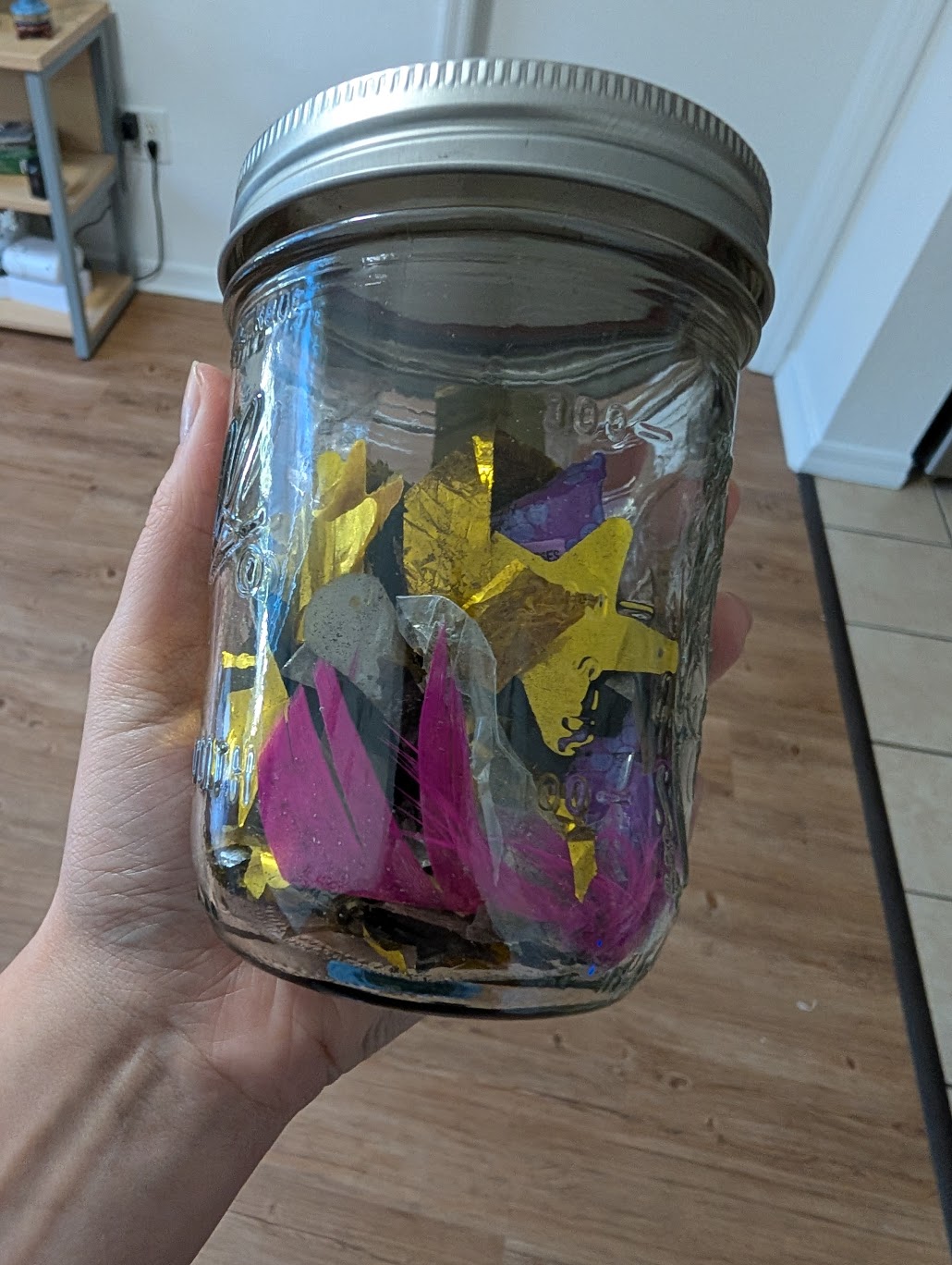
“I’ve been seeing things like fertilizer beads, Styrofoam, confetti, glitter, pieces of fabric — like dryer lint and clothing threads and strings — popping up again and again,” Novorska said. “So clearly, there’s an issue here.”

During the 2024 fall semester, Novorska was working on a class project when she read a paper about filtering plastic out of soil. 

Because plastic is hydrophobic, it rises when mixed with oil. This allows researchers to isolate and count the macro and microplastics. 

She did not expect much to result from this project, but tried it anyway. 

“I honestly didn’t expect it to work,” Novorska said. “But when I tried it, I was astonished by the amount of plastic that came out of the soil.”

One test sample, collected near the Watsco Center on campus, contained 384 pieces of plastic in a single 16-ounce jar. The Watsco Center is used throughout the year by UM athletics, but it is also a venue for dozens of graduation ceremonies, including UM and other schools in the area. At these events, it is common for confetti cannons to be popped for photos, potentially leaving behind hundreds of pieces of plastic. 

“That’s when I realized something was actually wrong,” she said. “I thought campus was very clean.”

The results turned a small class project into a full-scale undergraduate thesis. Over the next year, Novorska collected 30 soil samples from locations at UM and 30 more at St. Petersburg College in St. Petersburg, Fla. 

Samples were collected from “hot spots” on campus. Locations included outside the food court, near residence halls and around campus landmarks. Every sample from UM contained plastic, with the lowest having two pieces. At St. Petersburg college 13 samples had no plastic. 

“In one jar I found more than a thousand pieces,” she said. “Several others had 700 or 800.”

As her research expanded, Novorska began mapping her findings. She found that microplastics are not randomly distributed — that they accumulate in specific areas tied to student behavior.  

Outside of the food court, she found a high concentration of wrappers likely carried by the wind. Near the U statue — a popular spot for graduation photo shoots — she found layers of confetti embedded in the soil. 

“Over at the U statue, I did a sample a couple of weeks ago that had 396 pieces of plastic, and more than 100 pieces of confetti in it,” she said. “I kept digging and digging, and I never stopped seeing confetti as I was digging, which is very concerning.”

The findings revealed a disconnect between how clean campus appears versus what actually exists in the soil. 

Visible litter, known as macroplastics — which are larger than 5mm, is relatively limited on campus Novorska said. The real issue is the microplastics — pieces smaller than 5mm. 

“You can’t see them when you’re just walking by, but once you start looking for them, they’re everywhere,” she said, pointing out a piece of plastic just outside the window near Shalala.  

Blending her anthropology background with environmental science, Novorska approached her research like an archaeological study — using plastic as a lens to understand human behavior.

“I’m looking at these 10 sites to see what the plastic in the soil itself tells us about the students on campus,” she said. “What does it tell us about our use of different goods and potentially even the production of plastics?” 

One of the most common pollutants she identified was small green beads. Initially, neither Novorska nor campus experts could identify them.

Eventually, she traced them back to fertilizer — specifically polymer-coated fertilizer beads commonly used in potted plants brought onto campus.

A majority of the microplastics she found originated from these beads, rather than from campus landscaping practices. Other materials — including confetti, Styrofoam and synthetic fibers — reflected everyday student activities.

Her research also revealed geographic differences. While every UM sample contained some sort of plastic, a few samples from St. Petersburg College contained little to none. Novorska suspects the difference may be due to variations in maintenance practices, landscaping materials or campus culture. 

At UM, visible litter is often quickly removed, but less noticeable microplastics are left behind. 

“Our landscaping and maintenance staff do a great job of keeping campus looking clean, but you can’t clean up what you can’t see,” Novorska said.

Plastic doesn’t just stay where it lands. Rain washes debris from sidewalks into the soil, then into Lake Osceola and eventually into Biscayne Bay.

“This isn’t just a UM issue,” she said. “It’s a Miami issue, a Florida issue — and honestly, a global issue.”

Her findings also highlight plastic’s persistence. In one sample near Mahoney-Pearson Residential College, she discovered a candy wrapper from more than a decade ago still intact.

“It was sitting in the top layer of soil, and I could still read everything on it,” she said. “It makes you think — what will people find that we leave behind?”

For Novorska, the research has fundamentally changed how she views campus and cleanliness itself. Her work has also shifted her personal habits and sparked a broader mission: changing student behavior. 

By combining research, education and policy change, Novorska hopes to help reduce plastic pollution on campus. 

She is working with campus organizations to develop an educational campaign that frames microplastics in ways that resonate with different students, from public health concerns to environmental impacts and policy implications.

One initiative focuses on replacing plastic confetti with paper alternatives during graduation season.

“You’re celebrating your future while actively harming it,” she said. “And the pollution you leave behind won’t affect you — it will affect the students who come after you.”

Novorska plans to continue her work in graduate school, pursuing a masters degree in water science, policy and management. 

While the scale of microplastic pollution can feel overwhelming, she remains optimistic. 

“There is still hope,” she said. “There are actions we can take — as individuals and as a community — to reduce our reliance on plastic.”

Best April Fools’ pranks to pull on UM students

April Fools’ is the only time of the year when you are ethically allowed to psychologically torture your friends. You can use nearly any conversation throughout the day to break their reality for a couple of glorious seconds. So much potential, so little time.

Canes care for Canes, so here are some April Fools’ pranks you can use to keep your friends on their toes.

Sebastian the Ibis and Gigi are breaking up

Gigi’s had enough of losing March Madness. She’s leaving and taking her Smoothie King flavor and Diamonds Direct sponsorship with her. Cue the AI-generated images of her at Regatta and Sebastian crying alone in the Watsco Center.

Convincing your friends that the University’s mascot power couple couldn’t make it like Alix Earle and Baxton Barrios will send a shiver down their Hinge account’s spine. The prank is just as heartbreaking as it is bizarre.

When you tell them it’s a joke, it’ll help them see that they care about anthropomorphic animal couples more than they thought. 

Bill Cosford Cinema is turning into a pilates studio

Forget the popcorn and pick up those circle weights. The Bill Cosford Cinema, home to free movie screenings throughout the academic year, is turning into your friends’ dream — or worst nightmare.

You can just see it: the room full of pilates boards with the instructor dressed in Alo Yoga clothes on the stage. Say the pilates classes are the same price as a three credit course and it’s still believable. 

Go as far as to give them a date for the first class and tell them Mario Cristobal will be a special guest. 

Helpful tip: the more specific you get with your April Fools’ pranks, the easier it is to believe. 

Starbucks, the Archivist and Vicky’s closed for finals week as part of “caffeine free finals”

As the caffeine epidemic continues across the country, especially among college kids, the University of Miami is testing a new concept called “caffeine free finals.” With the school year coming to an end, finals are looming, and what is needed is not caffeine for pulling all-nighters or giving an energy boost for studying. 

The psychology department at UM has run several experiments testing how students perform with and without the help of caffeine. 

With an overwhelming amount of students acing tests without caffeine, UM has decided to ban all major coffee spots on campus in hopes that average final scores will rise. 

Part of Herbert Wellness Center shut down to build duck sanctuary 

The ducks on campus are multiplying by the minute. At this rate, there may be more ducks at UM than students. Because of this alarming issue, part of the Wellness Center is being demolished to build forever homes for the ducks. 

Those baby chicks you saw and took pictures of all cuddled up and cozy? They are homeless and are in need of a nice roof over their heads. Say goodbye to those exercise classes and say hello to the new feathery weights for the gym. 

Hopefully Sebastian does not get mad at his new, cuter competition.

Wednesday Market getting replaced by Gainsday Market

Editor’s Note: This is a fake, parody article. None of the information or people in the article are true or real.

This article is part of The Miami Hurricane’s April Fools Edition, and was written to remind our readers how easily misinformation can spread and how important it is to question what you’re reading.

Students walking to the Wednesday market on April 1 were met with a shocking sight: The familiar smell of Hibachi bowls and fresh produce had been replaced by an unmistakable cloud of grilled meat and the buzzing of Nutribullet Pro 900s.

The Wednesday Market has officially been replaced by Gainsday Market, a new protein‑obsessed pop‑up market run by two UM fraternities: Pi Kappa Beta and Alpha Zau Chi, who announced the takeover late Tuesday night.

The change affects the long‑standing weekly market that once brought local vendors to campus selling fruit, pastries and handmade goods. Now, the space is filled with high‑protein meals and gym‑rat drinks that look like they were designed by someone who has never tasted sugar.

One of the featured items at Gainsday Market is Pi Beta’s signature dish, the “Ultimate Bulk Bowl,” a meal that looks less like lunch and more like a dare. 

The bowl is built with 11 ounces of unseasoned grilled chicken and a scoop of tilapia flakes added “for texture.” There’s also a half hard‑boiled egg chopped into microscopic pieces, quinoa measured to the gram, a drizzle of “liquid protein concentrate” that smells faintly like metal and three almonds placed on top “for aesthetic balance.” 

Pi Beta junior and cashier John “Jimbo” Smith said the bowl is “engineered for maximum gains,” though he admitted he hasn’t actually eaten one. 

“We calculated the macros down to the decimal,” Smith said. “It’s like 74 grams of protein, zero-sugar and no carbs. But that’s the point. If you’re tasting things, you’re not bulking hard enough.” 

Many students who relied on the original Wednesday Market for a midweek treat were stunned by the transformation. 

Sophomore business major Tirley Shemple said she felt “personally attacked” when she realized her favorite taco stand had been replaced by a table stacked with vacuum‑sealed chicken breasts. 

“I used to come here for birria taco dates with my roommate,” Shemple said. “Now, everything smells like a gym bag. I don’t want to consume 40 grams of protein before noon. I want carbs and joy.” 

Pi Beta’s meals are prepared by Gary F. Elld, a 67‑year‑old house cook who says he “found his calling in protein science.” Elld, a former roadside vendor who once ran a stand selling only turkey legs and raw chickpeas, treats Gainsday Market like a personal mission. 

“I’ve dedicated my life to helping these boys grow,” Elld said while dusting chicken with creatine. He wakes up at 4 a.m. every Wednesday to prepare the meats, insisting he’s “here to build men, not serve salads.”

Alpha Chi is responsible for the market’s core item: the “Breakfast‑Basic Shake,” a beige, frothy blend. 

The shake includes two scoops of whey, instant coffee grounds, half a banana, sugar‑free Monster, three gummy vitamins, a spoonful of warm egg whites, and “one mystery ingredient chosen daily by the brotherhood.”

Clay Brewis, a junior in Alpha Chi who was aggressively promoting the drink to people walking by, insisted it’s “the perfect morning starter.”

“If you don’t like it, your discipline is the problem,” Brewis said.

The UM fraternities’ Gainsday Market will open again on April 8. Check the fraternity’s Instagram every Wednesday morning to see what’s on the menu and how much protein you’ll be getting.

A night with UMTV’s ‘Off the Wire’

There’s only one place at the University of Miami where you can watch live late night comedy sketches. That place is the School of Communication’s Studio C when the University’s comedy show “Off the Wire” takes center stage every other Thursday night.

“Off the Wire” is a late-night comedy TV show on UMTV, featuring skits that mix creativity, pop culture and current events. 

The Hurricane went behind the scenes and into the studio, met the casting crew, and got a feel for what it is like to work both on-air and behind the scenes.

Jada Wilson, the social media manager, said that it’s a space where “everybody can bring their own flair.”

In meetings where they plan the show, ideas come to life, no matter how simple or outrageous they are. Audrey Sears, member of the production team, mentioned that the environment is very creative, the team is open to any ideas and there’s no judgment. 

The crew also talked about how UMTV provides opportunities for professional growth. Students get to learn and apply new skills in the media world — from camera work to teleprompters, editing, writing, audio and, of course, acting.

Just from watching one show, you get the feeling from the team behind “Of the Wire” that they feel like a family. There is so much going on behind the scenes that people don’t see. 

It takes hours of preparation the day before the show to build something up, and the dedication, passion and collaboration among these people really make for an exciting and fresh watch.

Johnny Mustion, the executive producer, said that to prepare for Off The Wire the team has to meet at least three times a week to work on joke writing and rehearsals, among other things. 

Mustion says that it’s so worth it because they’re very proud of the end product and always want to improve and listen to the community. “It’s television”. 

When it’s time to focus and work, this team will make every trial run and do everything in their power so that the audience has a great show. Some members of the team even come in at around 2 p.m. to get ready for the 8:30 p.m. show.

They have live shows every other Thursday at the School of Communication in Studio C. 

Their March 19, show felt like a full-scale late-night production television show, even with a great live music performance by Dreamscape, a band of University of Miami students that plays alternative pop rock music. 

It is a very electric, welcoming environment. While speaking with the host of the late-night show, Wrigley Kordt, he shared his excitement with the interaction with the audience, saying you can feed off the energy of the audience, and that comedy can come from anywhere. 

 “Off the Wire” is a passionate student-led comedy show that delivers nonstop laughs thanks to its nonstop crew. 

Make sure to check out past episodes of “Off the Wire” on their YouTube channel and go see them live every other Thursday in Studio C at the School of Communication.

‘The Puerto Rican Prince:’ UM student rises in the ring

High school backyard matches were just the beginning for one UM student, who turned his love for wrestling into a career while pursuing college classes.

Long before stepping into a professional ring, Angel Santiago’s journey began in high school with a homemade wrestling organization he created with his friends. It was here that he officially created his ring name, “The Puerto Rican Prince.”  

“Starting out in the BWO [Backyard Wrestling Organization] helped me to really get my foot in the door, and it is what set me on the path to bigger matches and experiences,” Santiago said. 

The BWO started as a passion project but quickly gained traction as they landed on Fox News. It was more than just a hobby, but rather an early step toward the career he ultimately wanted to pursue.

This passion followed him to Miami, as he began formally training under wrestler Doc Holiday during his sophomore year, someone who not only helped shape his technical skills, but also his mindset. 

Under Holiday’s guidance, he learned that success in wrestling isn’t just about performance, but about perception, and understanding how others see you in the industry. 

“Doc taught me that perception shapes everything. People treat you based on how they see you, not always what’s real,” Angel said.“He pushed me to break those perceptions, understand where people are coming from, and be aware of who doesn’t have my best interests in mind” 

At the same time, he was very involved on campus. He served as executive producer for UMTV’S comedy show “Off the Wire” and held multiple leadership positions in the University’s professional film fraternity Delta Kappa Alpha, becoming vice president in his senior year. 

Balancing those responsibilities with wrestling required constant effort and sacrifice. Without established connections in Florida, he had to build his name from the ground up.

 He traveled for training and relied on friends for rides to shows, staying consistent even when opportunities were limited.

“I just kept showing up and trusting that my work would pay off, even when things felt uncertain,” Angel said. 

After about six months of persistence, things began to shift. His first major break came during his junior year at the Space Coast State Fair. Initially scheduled to only open the show, he was unexpectedly given the chance to fight in the main event after another wrestler dropped out. He delivered an impressive performance, giving his career the push in the right direction. 

Since then, he has continued to build momentum, even appearing at the same event as well-known wrestlers like Kurt Angle and Kevin Nash. 

More recently, in February, he experienced one of the most meaningful moments of his career in Milford, Connecticut, where he defeated a current WWE wrestler, Aaron Rourke, in front of a crowd of over 400 people. 

The match was especially significant because it brought together people from every stage of his life, family, friends from high school and even a close friend who served as his manager for the night. 

“Winning that match felt surreal, especially knowing how much it meant not just for me, but for everything it represented,” Santiago said. 

The event raised money for the Boys and Girls Club of Milford, something he said made the experience even more meaningful, as he is grateful for the opportunity to give back to a community that has always supported him.

Despite these milestones, the path has not been easy. For newcomers without established connections, the wrestling world can be cliquey and elitist. Breaking into those circles required not only talent, but resilience. 

Through it all, Holiday’s mentorship remained central. Teaching him how to stay grounded, protect himself in the ring, and maintain a positive outlook regardless of wins or losses.

“He showed me how to stay focused and hold the right mindset, no matter what happens in the ring.” 

Equally important was the support system he found at UM. He credits Delta Kappa Alpha in particular for encouraging him to keep going, even when his path didn’t fit the traditional mold. That support made it possible for him to continue pursuing something that many people didn’t initially understand.

Beyond the ring, wrestling has shaped how he approaches life. It has reinforced the idea that persistence leads to progress, that if you commit to something and continue showing up, results will follow. 

It has also shown him the importance of community, both in receiving support and giving it back. Looking ahead, he hopes to not only face bigger names in wrestling, but also create opportunities for others who may have the talent but lack the exposure.

“I’ve been in that position before, so now I want to give opportunities to people who have the talent but just need a chance, especially those who are willing to really work for it.” 

For students considering unconventional paths, his advice is simple: don’t be afraid to put yourself out there. 

“Art only means something if people can see and react to it,” Santiago said. “You can’t be afraid of judgment, people will always have something to say. You just have to push through the uncomfortable.”

From backyard wrestling to main event matches, his journey shows that success isn’t always linear. Persistence and consistency can take you far, and The Puerto Rican Prince is a clear example of that.